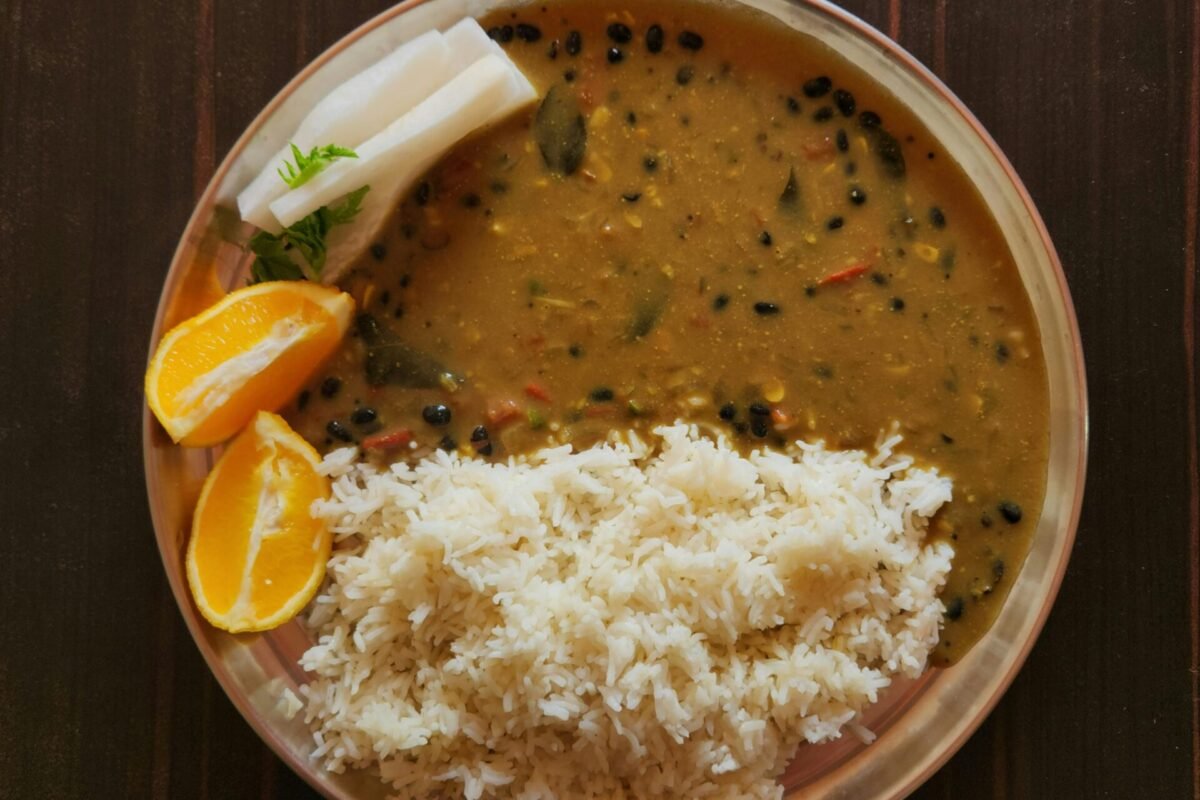
The Dal! We discovered this ultimate comfort dish during our stay in Delhi, at a small family restaurant in the Chandni Chowk neighborhood. The family’s grandmother was preparing her dal in a huge copper pot, and the aromas of cumin, turmeric, coriander, and garam masala perfumed the entire street. She served us this creamy, velvety dal with basmati rice and warm naan. From the first spoonful, it was like a warm hug—simple, comforting, aromatic, and absolutely delicious!
So, ready for a culinary journey to India? Get out your spices and your best pot—we’re taking you to Delhi!
How to Make Your Spiced Dal
Ingredients:
For the Dal:
- 300g red lentils (rinsed and drained)
- 2 tablespoons coconut oil (or traditional ghee)
- 1 medium onion (finely sliced)
- 4 garlic cloves (chopped)
- 1 piece fresh ginger (4cm, grated)
- 2 medium tomatoes (diced)
- 400ml coconut milk
- 600ml vegetable broth (or water)
- 1 teaspoon salt (adjustable)
Spice Selection:
- 1 teaspoon cumin seeds
- 1 teaspoon black mustard seeds
- 1 teaspoon ground turmeric
- 1 teaspoon ground coriander
- 1/2 teaspoon cayenne pepper (adjustable)
- 1 teaspoon garam masala
- 1/2 teaspoon smoked paprika
- 2 bay leaves
- 1 cinnamon stick (optional)
For the Tadka (Final Tempering):
- 2 tablespoons coconut oil or ghee
- 1 teaspoon cumin seeds
- 2 garlic cloves (thinly sliced)
- 1 dried red chili (whole or crumbled)
- A few fresh curry leaves (if available)
For Serving:
- Cooked basmati rice
- Fresh chopped cilantro
- Plain yogurt or coconut yogurt
- Lime (cut into wedges)
- Naan or flatbread
- Fresh sliced green chili (optional)
How Long Does It Take to Make This Recipe?
This recipe takes 10 minutes to prepare and 25 minutes to cook, for a total of 35 minutes. Red lentils cook quickly, making this perfect for a weeknight meal!
Step-by-Step Instructions:
Step 1: Rinse the Lentils
Place the red lentils in a fine-mesh strainer and rinse them thoroughly under cold water, stirring with your hands. The water will be cloudy at first—keep rinsing until it runs clear. This rinsing removes excess starch and makes the dal less foamy during cooking. Red lentils cook very quickly and don’t need soaking, unlike other legumes—that’s what makes this dish so convenient for weeknights!
Step 2: Prepare the Aromatics
While you’re rinsing the lentils, prepare all your aromatics. Finely slice the onion, chop the garlic, grate the fresh ginger (use a spoon to easily remove the thin skin), and dice the tomatoes into small pieces. Having everything ready before you start cooking makes the process so much smoother! The smell of garlic and ginger cooking together will already make your mouth water.
Step 3: Sauté the Spices and Aromatics
In a large pot or Dutch oven, heat the coconut oil over medium heat. Add the cumin and black mustard seeds—they’ll start to sizzle and release their aromas in about 30 seconds. Watch out, the mustard seeds can pop! Immediately add the sliced onion and sauté for 5-6 minutes until translucent and starting to brown slightly. Add the garlic and ginger, sauté for 1 more minute until fragrant. This aromatic base is essential for flavorful dal!
Step 4: Add the Ground Spices
Reduce the heat to low and add all your ground spices: turmeric, ground coriander, cayenne pepper, and smoked paprika. Stir constantly for 30 seconds to 1 minute—the spices will become very fragrant and lightly toasted. Don’t let them burn! This technique of “toasting” the spices releases their essential oils and multiplies their flavor tenfold. Your kitchen will smell absolutely incredible—this is the smell of authentic India!
Step 5: Cook the Lentils with the Tomatoes
Add the diced tomatoes and mix well—they’ll start to break down and create a sauce base. Cook for 2-3 minutes, stirring. Now add the rinsed red lentils, coconut milk, vegetable broth, bay leaves, cinnamon stick, and salt. Mix well to combine everything. Bring to a boil over high heat, then immediately reduce to low heat. Cover partially and simmer gently for 20 minutes, stirring occasionally to prevent sticking to the bottom.
Step 6: Monitor the Texture
During cooking, the red lentils will completely break down and create that creamy texture characteristic of dal—that’s exactly what we want! Stir regularly and mash a few lentils against the side of the pot with your spoon to speed up the process. The dal is ready when it has the consistency of a thick, creamy soup. If it’s too thick, add a little broth or water. If it’s too thin, simmer uncovered for 5 more minutes.
Step 7: Add the Garam Masala
Once the lentils are completely cooked and creamy, remove the bay leaves and cinnamon stick. Add the garam masala and mix well—this final spice brings that typically Indian depth of flavor that makes all the difference! Taste and adjust the seasoning: more salt if needed, a little lime juice for freshness, or more chili if you like it spicy. The dal should be rich, creamy, and aromatic.
Step 8: Prepare the Tadka (Final Tempering)
This is THE finishing touch that transforms good dal into EXCELLENT dal! In a small pan, heat the coconut oil or ghee over medium-high heat. Add the cumin seeds and let them sizzle for 10 seconds. Add the sliced garlic and red chili—sauté for 30 seconds until the garlic is golden and fragrant. If you have fresh curry leaves, add them now (watch out, it splatters!). Immediately pour this sizzling mixture over your dal—it will crackle and release an incredible aroma. Don’t mix it in completely; let the tadka float on top for visual and aromatic effect!
Step 9: Serve and Enjoy
Serve your dal piping hot in deep bowls, over a bed of fragrant basmati rice. Generously sprinkle with fresh chopped cilantro. Add a spoonful of plain yogurt, which creates a beautiful creamy and refreshing contrast. Serve with lime wedges to squeeze when eating—the acidity awakens all the flavors! Accompany with warm naan or flatbread for soaking up the sauce. Close your eyes and let yourself be transported to the spicy streets of Delhi!
Pro Tip: Creamy Dal vs Textured Dal
You can control the texture of your dal! For an ultra-creamy, velvety dal (like soup), partially blend it with an immersion blender. To keep more texture with visible lentils, blend just one-third of the dal and mix it back with the rest. For a rustic dal with all the lentils intact, reduce cooking time to 15 minutes and don’t mash it. Each version is delicious—it’s a matter of personal preference!
Key Ingredients & Substitutions
Red Lentils
Red lentils (or coral lentils) cook quickly without soaking and break down into a creamy texture perfect for dal. If you don’t have any, use yellow lentils (moong dal), which give a similar result. Green or brown lentils take longer and hold their shape, so adjust the cooking time (45 minutes) and amount of liquid if using them.
Coconut Milk
Coconut milk brings incredible richness and creaminess to dal. For a lighter version, use light coconut milk or replace completely with additional vegetable broth. You can also use cashew cream (cashews blended with water) for an equally creamy version. Coconut milk also balances the heat of the spices!
Ghee or Coconut Oil
Ghee (Indian clarified butter) is traditional and brings an incomparable rich, buttery flavor. Coconut oil is our favorite vegan alternative that works perfectly. You can also use olive oil, sunflower oil, or even regular butter. Ghee handles high temperatures very well, ideal for the final tadka!
Garam Masala
This Indian spice blend is absolutely essential for authentic dal! If you don’t have any, make it at home by mixing: ground cardamom, cinnamon, cloves, cumin, coriander, and black pepper. Or in a pinch, replace with more curry powder + a pinch of cinnamon. Garam masala is now easily found in the spice aisle of supermarkets!
Fresh Tomatoes
Ripe fresh tomatoes give the best flavor, but canned crushed tomatoes (200g) work perfectly too, especially in winter when fresh tomatoes lack flavor. You can also use tomato paste (2 tablespoons) diluted in a little water. Tomatoes bring acidity and umami that balance the dish.
VARIATIONS & CUSTOMIZATIONS
Spinach Dal (Dal Palak)
For an even more nutritious version, add 200g fresh spinach (or 150g frozen) during the last 5 minutes of cooking. It will melt into the dal and create beautiful green swirls. You can also blend everything for a creamy green dal. Add a pinch of grated nutmeg, which pairs perfectly with spinach. It’s delicious and super rich in iron!
Complete Protein Dal
Transform your dal into an ultra-high-protein meal! Add 200g canned chickpeas (drained) at the same time as the lentils. Serve with a poached or soft-boiled egg on top. Garnish with hemp seeds, roasted cashews, and pumpkin seeds. Serve with quinoa instead of rice. You get a complete meal with all essential amino acids!
Winter Vegetable Dal
In winter, enrich your dal with root vegetables! Add cubes of sweet potato, butternut squash, or carrots at the same time as the lentils. They’ll cook together and bring a natural sweetness that contrasts beautifully with the spices. Also add chopped kale in the final minutes. It’s comforting, hearty, and perfect for cold evenings!
Quick Thai Red Curry Dal
For a quick Indo-Thai fusion, replace all the Indian spices with 2 tablespoons Thai red curry paste. Add coconut milk, red lentils, and simmer. Garnish with Thai basil, crushed peanuts, and lime. It’s a spicier, more exotic version that’s a delightful surprise!
FREQUENTLY ASKED QUESTIONS
Why Is My Dal Foamy During Cooking?
This is normal with lentils! This foam is starch rising to the surface. Simply skim it off with a skimmer or spoon during the first few minutes of cooking. Rinsing the lentils well before cooking also reduces this phenomenon. Once the dal starts simmering gently, the foam disappears on its own.
My Dal Is Too Thin or Too Thick, What Should I Do?
Too thin? Let it simmer uncovered for an additional 10-15 minutes so the excess liquid evaporates. You can also mash more lentils against the side of the pot—the starch will naturally thicken the sauce. Too thick? Simply add vegetable broth or hot water, one ladle at a time, until you reach the desired consistency. Dal also thickens as it cools!
Can You Freeze Dal?
Absolutely! Dal freezes perfectly for up to 3 months. Let it cool completely, then transfer to airtight freezer-safe containers or freezer bags. Thaw it in the refrigerator the night before, then reheat gently over low heat, adding a little water or broth if needed. The flavors remain excellent!
Is the Tadka Absolutely Necessary?
The tadka (final tempering) isn’t mandatory, but it really transforms the dish! It’s that finishing touch that brings an extra layer of toasted aromas and depth. If you’re short on time, you can skip it—your dal will still be delicious. But if you have 2 minutes, do it! It’s what distinguishes homemade dal from Indian restaurant dal.
Is Dal Better the Next Day?
YES! Like many stewed dishes, dal improves as it sits. The flavors have time to blend and develop. Make it the day before and reheat gently—add a little water since it will have thickened. It’s perfect for meal prep or stress-free entertaining! Store for up to 5 days in the refrigerator in an airtight container.