How to Make Your Vegetarian Pad Thai with Vegetables
Ingredients:
For the Noodles:
- 200g flat rice noodles (wide, Pad Thai style)
- Boiling water for soaking
For the Stir-Fry:
- 2 tablespoons neutral oil (sunflower, peanut)
- 3 garlic cloves (finely chopped)
- 1 carrot (julienned)
- 1 red bell pepper (cut into strips)
- 150g Chinese cabbage or regular cabbage (shredded)
- 100g fresh bean sprouts
- 2 eggs (beaten) – optional for vegan version
- 200g firm tofu (cut into cubes and pressed)
- 4 green onions (chopped, white and green parts separated)
For the Pad Thai Sauce:
- 3 tablespoons soy sauce (or gluten-free tamari)
- 2 tablespoons tamarind paste (or tamarind juice)
- 2 tablespoons coconut sugar (or brown sugar)
- 1 tablespoon rice vinegar
- 1 teaspoon sriracha or sambal oelek (adjustable)
- 1 tablespoon water
For Serving:
- 60g roasted peanuts (coarsely crushed)
- 2 limes (cut into wedges)
- Fresh chopped cilantro
- Extra fresh bean sprouts
- Fresh red chili sliced (optional)
How Long Does It Take to Make This Recipe?
This recipe takes 15 minutes to prepare and 10 minutes to cook, for a total of 25 minutes. The key to successful Pad Thai? Prepare everything before you start cooking—the wok waits for no one!
Step-by-Step Instructions:
Step 1: Prepare the Noodles
Place your rice noodles in a large bowl and cover with boiling water. Let them soak for 8-10 minutes until soft but still slightly firm—they’ll finish cooking in the wok! Stir them occasionally to prevent sticking. Drain well and rinse quickly with cold water to stop the cooking. Set aside. Don’t let them soak too long or they’ll become mushy—you want them to maintain a nice texture!
Step 2: Prepare the Magic Sauce
In a small bowl, mix all the sauce ingredients: soy sauce, tamarind paste, coconut sugar, rice vinegar, sriracha, and water. Whisk well until the sugar is completely dissolved—the sauce should be smooth and uniform. Taste and adjust according to your preferences: more sugar if you like it sweet, more sriracha if you like it spicy, more tamarind for acidity. It’s your Pad Thai, customize it!
Step 3: Prepare Everything
This step is CRUCIAL! Once you start cooking in the wok, everything happens very fast. So prepare EVERYTHING beforehand: chopped garlic, julienned carrot, bell pepper strips, shredded cabbage, chopped green onions (white and green separated), tofu cubes, beaten eggs, crushed peanuts, chopped cilantro. Arrange everything in small bowls near your wok. Thai chefs always do it this way—it’s the secret to successful Pad Thai!
Step 4: Stir-Fry the Tofu
Heat your wok (or large skillet) over high heat with 1 tablespoon of oil until very hot and starting to smoke slightly. Add the tofu cubes and stir-fry for 3-4 minutes without stirring too much—you want them to brown well on all sides. They should be crispy and golden. Remove them from the wok and set aside on a plate. This step gives the tofu an incredible texture that contrasts perfectly with the soft noodles!
Step 5: Cook the Vegetables
In the same wok still over high heat, add the second tablespoon of oil. Toss in the chopped garlic and white part of the green onions—stir-fry for 30 seconds until fragrant. Add the carrot, bell pepper, and cabbage. Stir-fry vigorously for 2-3 minutes, stirring constantly with a spatula. The vegetables should stay crispy—that’s the magic of the wok! They should be slightly charred in spots.
Step 6: Add the Eggs (Optional)
Push all the vegetables to the side of the wok to create space in the center. Pour the beaten eggs into this space and let them set for a few seconds. Then, with your spatula, quickly scramble them while gradually mixing them with the vegetables. The eggs will create little golden ribbons that coat the vegetables—exactly like in Bangkok street restaurants! For the vegan version, simply skip this step.
Step 7: Assemble the Pad Thai
This is the magic moment! Add the drained noodles, reserved tofu, and bean sprouts to the wok. Pour your sauce over everything. With two spatulas (or a spatula and chopsticks), lift and toss vigorously for 2-3 minutes. The noodles should absorb the sauce and color beautifully. Everything should be piping hot, glossy, and fragrant. Add the green part of the green onions and toss for another 30 seconds. The wok should be smoking, the aromas should be explosive!
Step 8: Serve Thai Style
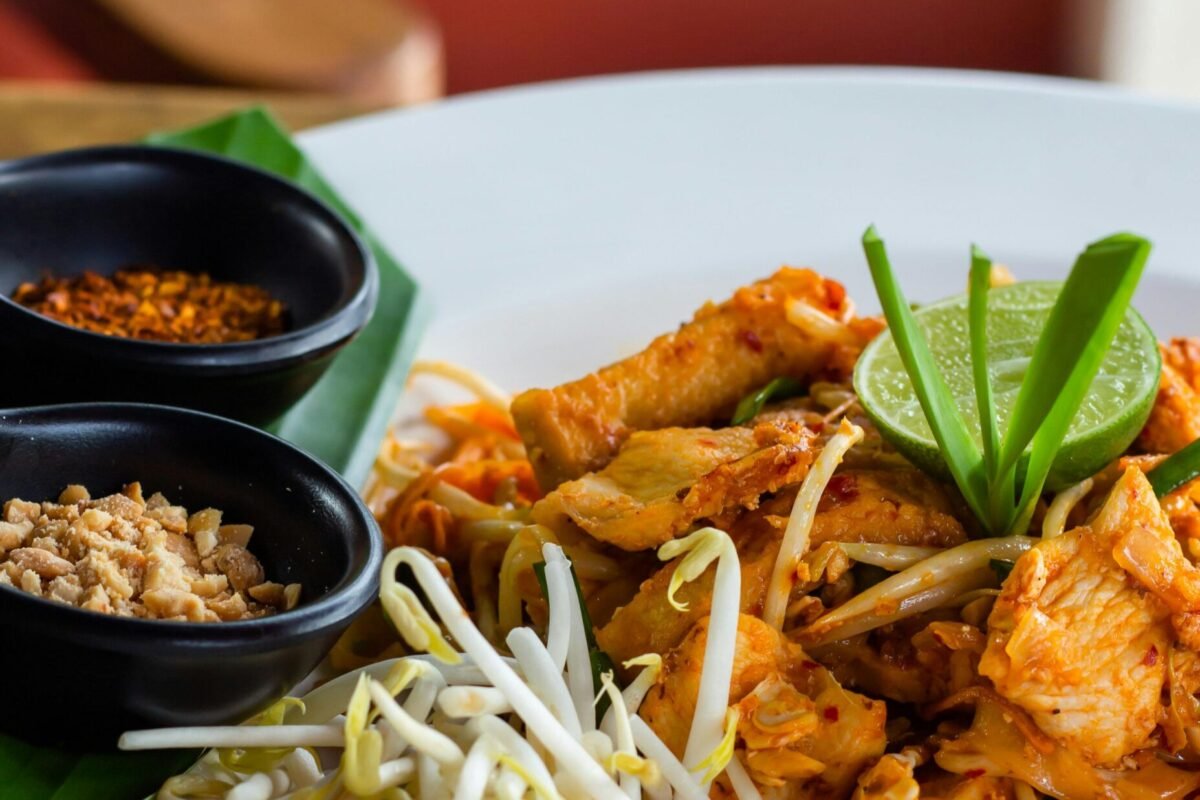
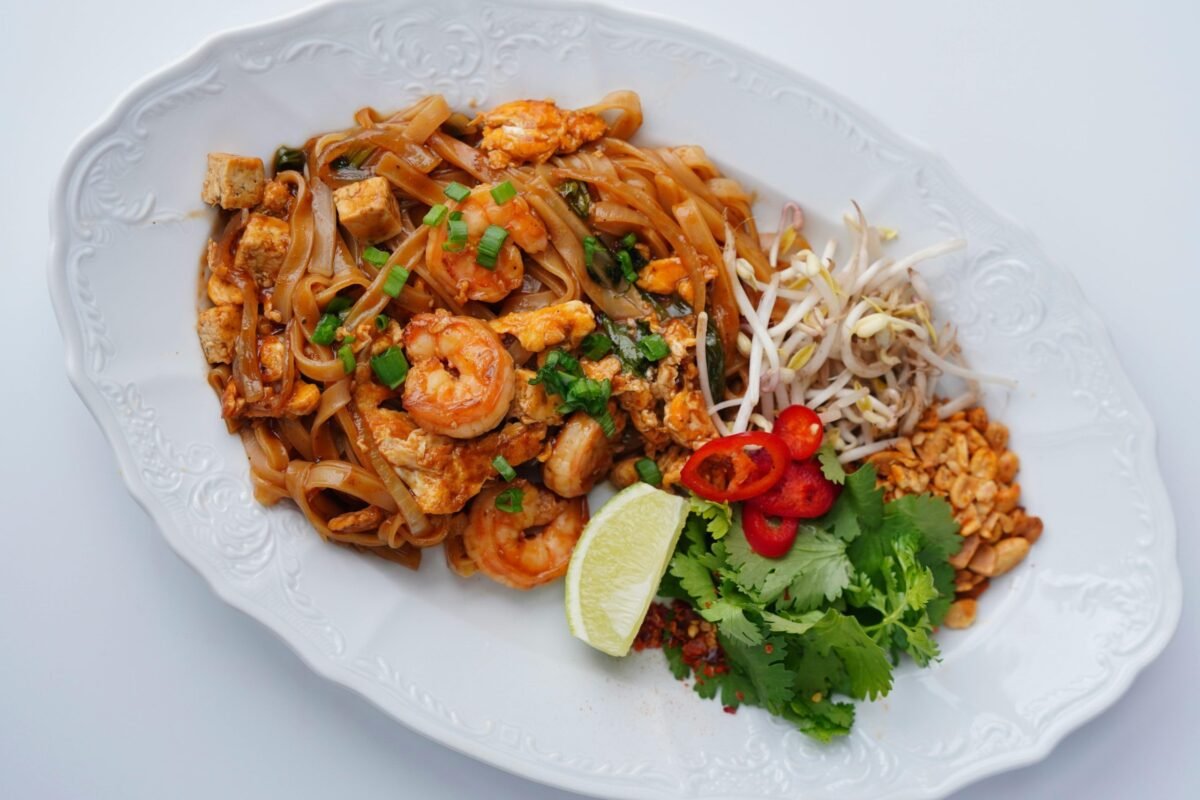
Immediately transfer your Pad Thai to hot plates or bowls—Pad Thai is best enjoyed piping hot! Generously sprinkle with crushed peanuts, fresh cilantro, and bean sprouts. Add chili slices if you like heat. Most important: serve with generous lime wedges that everyone will squeeze over their plate when eating. This fresh lime juice awakens ALL the flavors—it’s essential! Your vegetarian pad Thai is now ready to enjoy!
Pro Tip: The Blazing Hot Wok Technique
The secret to authentic street-style Pad Thai? A VERY hot wok! Professionals cook over extremely high heat to achieve that “wok hei”—that characteristic smoky flavor. At home, turn your heat to maximum and don’t overcrowd the wok. If you’re cooking for more than 2 people, make several batches rather than one big one—the result will be infinitely better! To learn more about wok cooking techniques, check out this comprehensive guide on Asian cooking.
https://www.sitedeculinaire.com/wok.